

COMING SOON:
L1 — USV & ROUV Remote Operations Awareness (RVO-A)
Understand how remote vessel operations work, what information the ROC provides and where the main operational limitations begin.
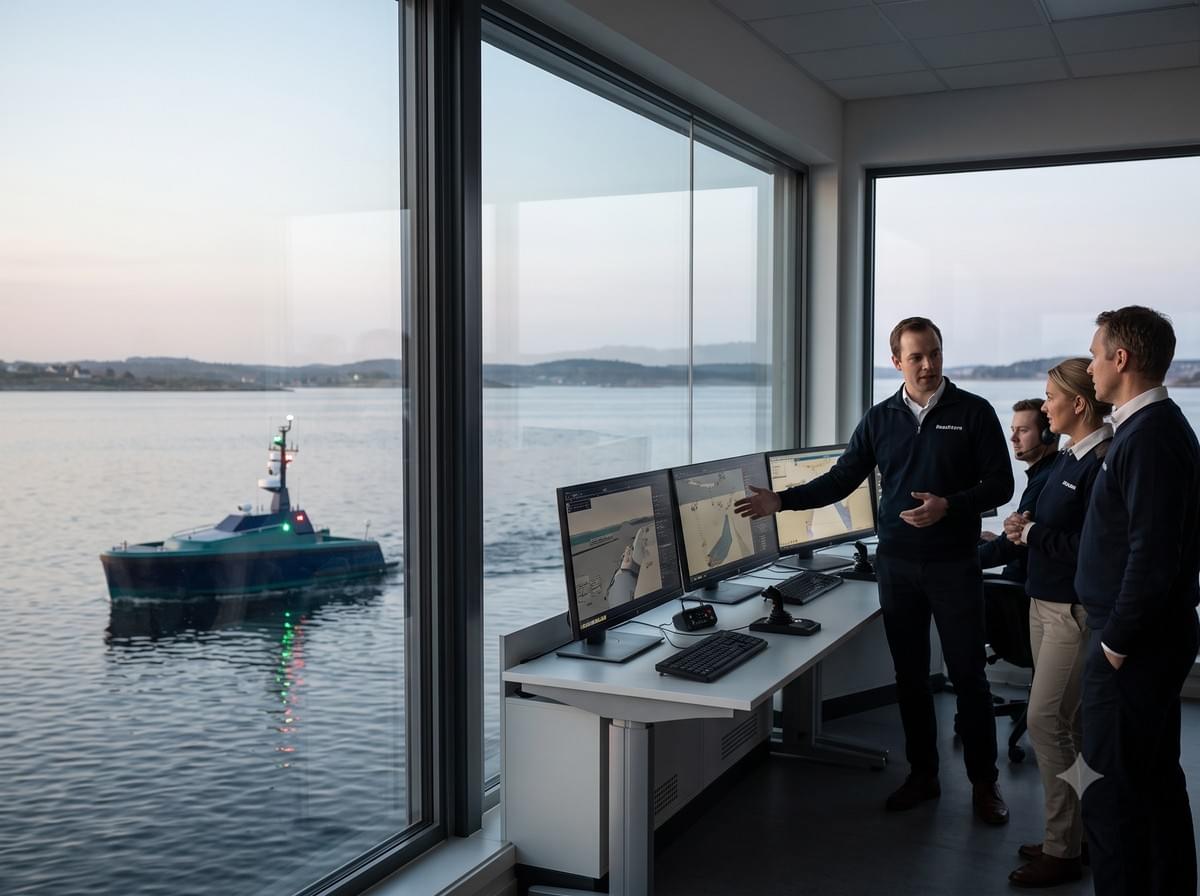
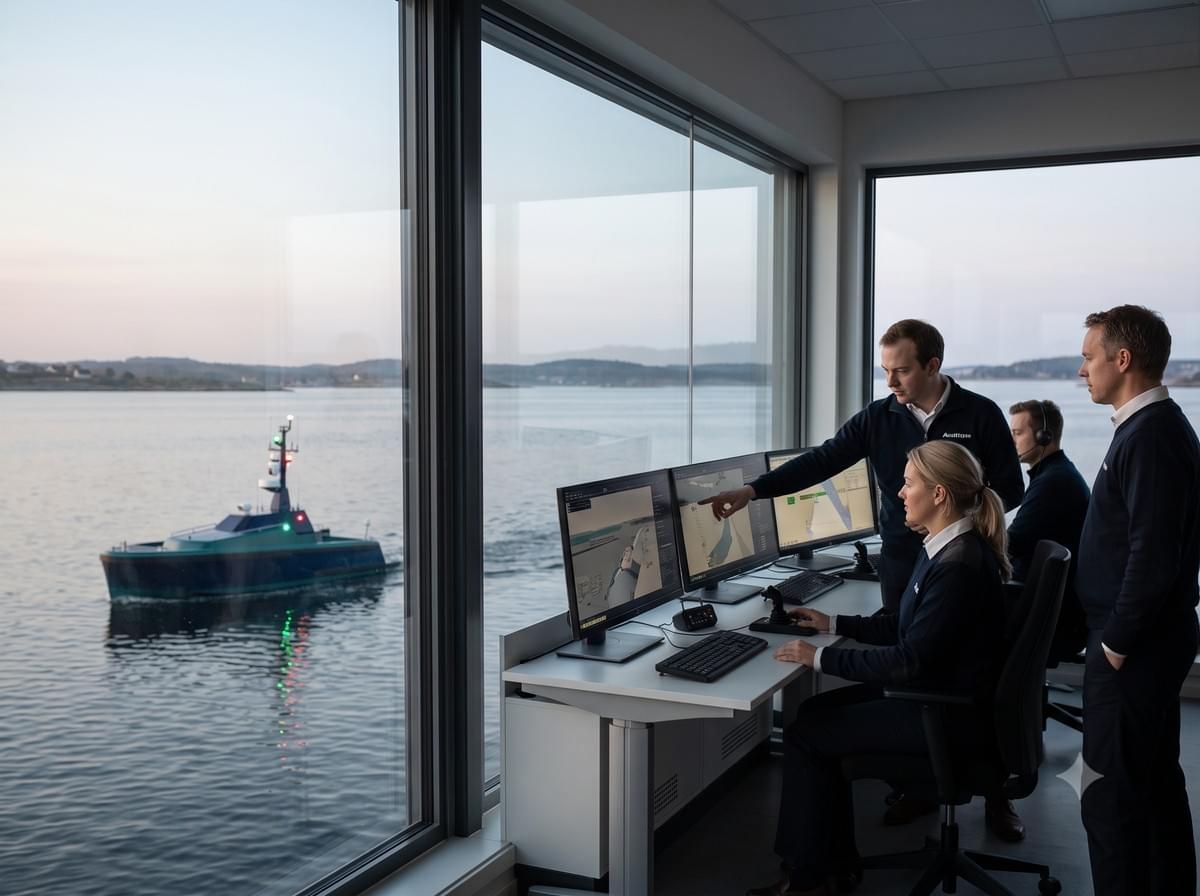
An instructor-led introduction to USV, ROUV and remote vessel operations. Participants observe the training environment, discuss ROC functions, communication links, sensor and camera limitations, human oversight, Safe State, E-stop and the regulatory context. L1 is an awareness course: participants observe and discuss; they do not control or navigate a vessel.
Who is this course made for?
Maritime professionals, managers, surveyors, educators, vessel owners, technology suppliers, clients and career changers who need a credible first understanding of remote vessel operations.
Additionally, no prior remote-operations training is required.
What participants gain from this course:
- A clear vocabulary
- A map of the remote-operations system
- An understanding of key limitations
- A structured basis for deciding whether to progress to L2 familiarisation
Format and duration of the course:
- Instructor-led
- Standard duration: 8 hours
- Observation, discussion, and guided worksheets and trainer-controlled observation
Results of completing the course:
MaritimeSkills Statement of Attendance. This is awareness training and does not confer live-vessel control authority, ROC watchkeeping competence or statutory Remote Operator status.

COMING SOON:
L2 — USV & ROUV Remote Operations Familiarisation (RVO-F)
Move beyond observation through guided tasks that connect the vessel, ROC interface, communication link, control authority, Safe State and recovery workflow.
A structured foundation and guided-familiarisation course for participants who need more than general awareness. L2 combines instructor input, systems and route-risk exercises, ROC layout review, camera/chart/traffic comparison, failure-mode discussion and controlled familiarisation in the T-ROC training environment. The emphasis is on recognising states, following guided tasks, recording observations and understanding limitations — not on proving operational competence.
Who is this course made for?
Maritime personnel, company representatives, technical staff and prospective remote-operations personnel who already understand the basic concept or have completed L1, and who need structured familiarisation with the information flow and guided workflows of a remote vessel operation.
What participants gain from this course:
- A practical mental model of the remote-operation system
- Guided experience of authority and control logic
- Recognition of link degradation, loss and Safe State
- Recovery and handover awareness
- A documented foundation-knowledge record.
Core guided scenarios:
- Basic control & Authority
- Link Degredation / Loss / Safe State
- Recovery & Handover
Results of completing the course:
MaritimeSkills training-completion and foundation-knowledge record, subject to final programme approval. It does not confer live-vessel control authority, ROC watchkeeping competence or statutory Remote Operator status.
In development:
L3 — Remote Vessel Scenario Operations (RVO-S)
Future simulator-based scenario training for remote watch, traffic interpretation, communication degradation, sensor limitations, Safe State, handover and integrated operational decision-making. Delivery will begin only after the required simulator, scenario, logging, debrief and assessment capability has been validated.
In development:
L4 — ROC Management & Remote Operations Coordination (RVO-M)
The management tier for experienced personnel progressing from operational performance to supervision, multi-role ROC coordination, incident escalation, continuity, decision logging and evidence-led debrief. L4 will require verified L3 completion; any equivalence route must be formally approved before publication.